Categories
Thrift Stores

Thrift Store Tips: 10 Risky Things Not to Buy

5 Unexpected Places to Find Inspiration For Your Next Graphic Design  Project – SEO Web Design, LLC
Shopping thrift stores shouldn’t be scary — but the reality is that even the savviest of thrift shoppers could unknowingly purchase unsafe and potentially dangerous items at thrift store in Destin, FL. Thrift store tips can save you a few bucks on expensive necessities but without you even knowing it at time of purchase, eventually cost you big on the safety scale. These 10 items you shouldn’t buy at a thrift store each carry their own unique “risk.” According to the US Consumer Product Safety Commission, a few specific items on this list should never be purchased or sold at a thrift store because they carry the risk of having been recalled by the manufacturer or previously damaged by the former owner or expired over time. While not a safety risk, there are still other items that when bought used defeat the purpose of buying the item at all. Plus, I personally believe that still other things shouldn’t be shopped at thrift stores because of their high “ick” risk of having been previously used in ways that make you go “ew!” I love shopping thrift stores for the best selection of quality clothing brands at a fraction of their original cost. But when it comes to shopping the other departments of thrift stores, keep this important checklist in mind so that you don’t accidentally invest in a thrift store score that compromises your safety or state of well-being!


Whether you’re shopping at a thrift store, yard sale or on a site like Ebay or free/swap/trade sites like Freecycle and Craigslist, avoid buying these 10 items to keep your safety AND savings in check. I’d love to hear your thoughts on this checklist of risky items you should never thrift store shop. Let me know if I should add another “risk item” to the list by leaving a comment below the post. Plus, I’d love to know things that while tempting, you ultimately decided not to buy at the thrift store. We can’t buy everything all the time!


Thrift Store Tips on What Not to Buy

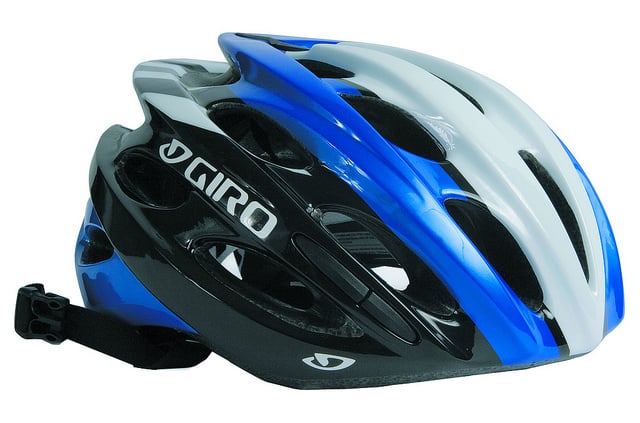
1.) HELMETS
Thrift Store Tips: 10 Risky Things Not to Buy


DON’T BUY THEM BECAUSE: Once a helmet receives impact, its ability to protect the head from future impact has decreased. Actually, if your helmet has received significant impact from crash, collision or fall then you should technically buy a new helmet to sustain future injury.

THE RISK YOU TAKE: Buying safety equipment like helmets from thrift stores seems harmless, but all you know about that helmet is what you’re looking at and not what it’s actually experienced. The potential risk you take is that the helmet could have withstood impact and was donated to the thrift store after being replaced by its former owner with a new and therefore safer helmet. The former owners of safety equipment usually won’t remember that their equipment has been used and abused and is therefore not safe to donate, which is why the chances of finding helmets for sale secondhand remains likely despite a general understanding of their average lifespan.


WHY IT’S WORTH THE FULL COST: When it comes to safety equipment don’t cut corners to save a few bucks on used equipment. Sure, there’s a chance the helmet may never have been worn at all. Heck, it could even look brand new! But like taking the chance of not buckling up in the car or forgetting to look both ways before you cross the street, the cost of that “small chance” becoming reality will cost you BIG loss in the end. Fork over the price-in-full for new safety equipment to ensure both health and wealth.

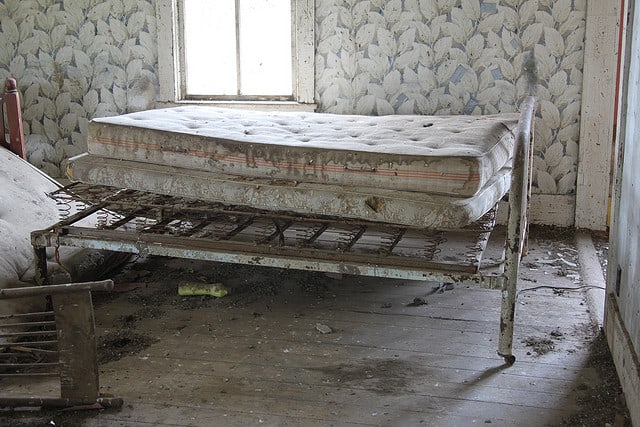
2.) MATTRESSES & BED FRAMES
Thrift Store Tips: 10 Risky Things Not to Buy 


DON’T BUY THEM BECAUSE: Mattresses are the number one “homes” to that little epidemic we like to call bed bugs. Bed bugs are microscopic, nocturnal critters that can hibernate in the far corners of our mattresses for months without feeding. That means a mattress or bed frame may be in a thrift store for months and soon after purchase and placed in a home of people, the bed bugs awaken because they sense the warmth of bodies sleeping above them. Gross, I know — but ’tis the truth!

THE RISK YOU TAKE: While cities like New York City have laws guaranteeing a renters’ right for free extermination of bed bugs, a homeowner will have to spend a few thousand dollars for the full extermination process once the bed bugs are discovered. Not to mention the frustrating process of washing and drying clothing if the bed bugs have moved into your closet and drawers.

WHY IT’S WORTH THE FULL COST: I speak from personal experience, having endured living with bed bugs in my New York City apartment for approximately two months in 2010. I threw away all of my furniture and covered my mattress with a cover, washed and dried all of my clothing twice and had a visit from Barry the exterminator three times. It was a difficult situation to deal with and one which I stress no one should ever risk experiencing themselves when shopping in thrift stores.

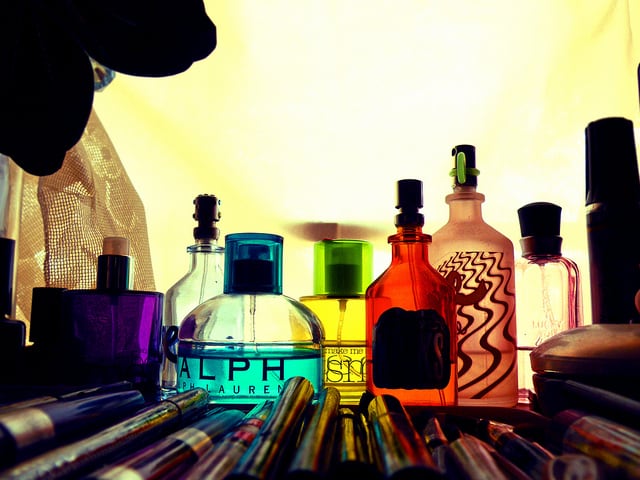
3.)  OLD OR NEW MAKEUP
Thrift Store Tips: 10 Risky Things Not to Buy


DON’T BUY THEM BECAUSE: Makeup have expiration and best-used-by dates which are not legally required to be marked on the bottles. Since we can’t find an expiration date on our makeup containers, we only know that it’s expired if we remember the approximate date of original purchase.

THE RISK YOU TAKE: The general rule of thumb is to throw away unopened makeup after a “few years” — but only if it’s remained at stable room temperature. Whose to say those bottles of Cover Girl foundation being sold for $1 each at your local Goodwill weren’t boiling in the summer’s heat while being transported to the store? The opportunity for cheap makeup deals is appealing at thrift stores, but you take the chance that you’re purchasing expired makeup that will run off your face or even worse, have a reaction with your skin since the formula has weakened over time and harsh conditions.

WHY IT’S WORTH THE FULL COST: If shopped correctly, you can still get makeup at discounted prices. When purchasing discounted makeup at a major retail chain, you probably are buying unopened makeup that’s been on the shelf a tad too long than the store wants. But at a thrift store, the shelf life is indefinite since it’s less likely a thrift store employee is going to mind the makeup inventory like a drugstore would. Watch for sales at your local CVS or Rite Aid instead!


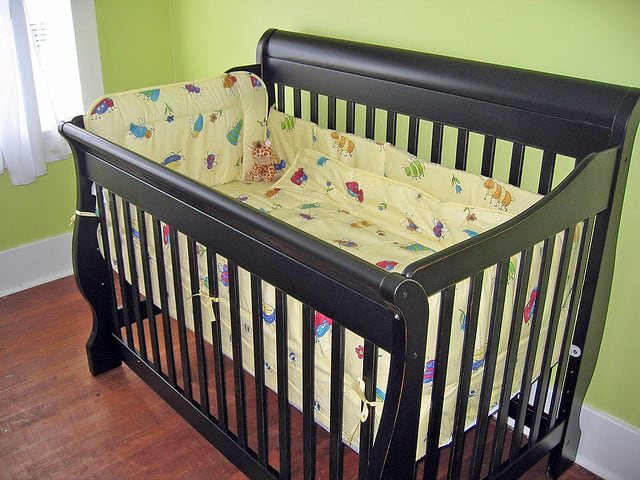
4.) CHILDREN’S CRIBS
Thrift Store Tips: 10 Risky Things Not to Buy


DON’T BUY THEM BECAUSE: Children’s cribs, strollers, swings and car seats are carefully regulated to meet the highest safety criteria of the moment. When one of the above is found NOT to meet the government’s closely monitored standards, that item is recalled and therefore legally forced to be taken off the shelves of stores and returned to the manufacturer for recycling.

THE RISK YOU TAKE: If you own a crib that has been recalled, a public service announcement is made through the news and you are asked to send it back to the manufacturer so that it’s no longer used by you and so that it doesn’t accidentally fall into the secondhand sales industry. However, we cannot hold everyone accountable for awareness of each and every recall, which is why there is always a risk that the toy, sporting equipment, kitchen appliance and yes, even baby crib has been recalled but the previous owner donated it to the local thrift store unaware that they were passing on a safety risk to an unknowing potential buyer. Some reasons old baby cribs are unsafe is because they collapse or because the space between the bars is too wide and can harm small children up to the point of suffocation. According to government regulations set by the US Consumer Product Safety Commission, no thrift store is supposed to sell donated baby cribs, strollers, baby seats, swings and more. But the true responsibility rests in the consumer and that is why we must be discerning of our secondhand purchases for children.


WHY IT’S WORTH THE FULL COST: Purchasing a baby crib new means you’re investing in something that has not been recalled, since it remains on the shelves of a mass market retail store. This doesn’t mean that it won’t be recalled in the near future, but the chances of you hearing about that recall is likely. Old recalls are not repeatedly announced via public service announcements in the news, so you may buy a baby crib at a thrift store that was recalled two years ago and you’ll never hear about it.

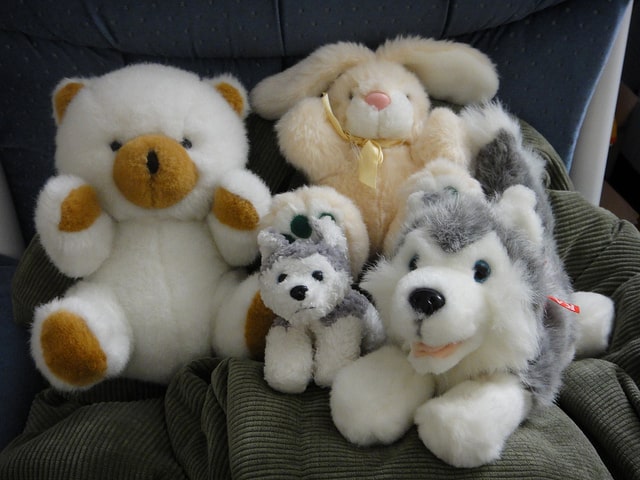
5.) STUFFED ANIMALS
Thrift Store Tips: 10 Risky Things Not to Buy


DON’T BUY THEM BECAUSE: Next to diapers, stuffed animals are probably the most disposable items owned by children . This is because stuffed animals are more likely to be slobbered on, mixed with food, eaten up by pets and yes … even the proud absorbing wipe of a pee-pee or poo-poo! Secondly and far more important than their gross factors, stuffed animals are made with materials to resemble human and animal hair which can become the happy homes of lice. Ick!

THE RISK YOU TAKE: Since stuffed animals are machine washable, you can take the risk of acquiring icky remnants of past lives or current pests and simply wash the stuffed critters immediately upon arriving home from thrift shopping. Washing thrift store purchases immediately is a regular practice for most thrifters anyway. Just make sure your 8-year-old daughter doesn’t start playing with her new stuffed doggie before he gets a dose of Tide detergent!

WHY IT’S WORTH THE FULL COST: Like buying lingerie & underwear, some things are just meant to be bought new. Stuffed animals may cost one-quarter of their full price at the thrift store, but do you really want to take that stuffed puppy home only to find it was the previous owner’s snot rag or even worse, for the school nurse to call home from school to report that your son or daughter has a head full of lice? I didn’t think so!

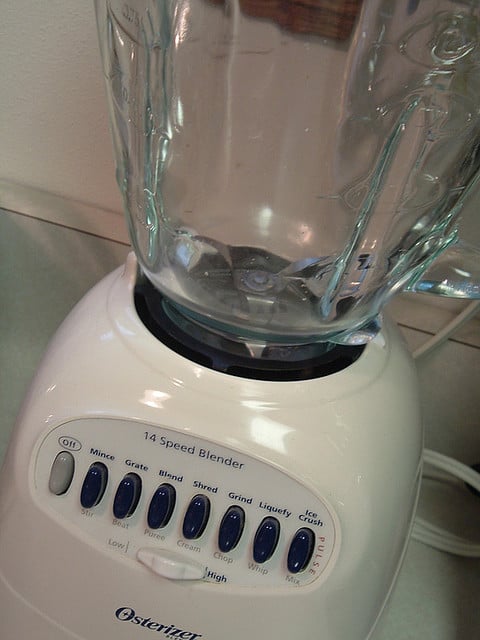
6.) FOOD BLENDERS AND PROCESSORS
Thrift Store Tips: 10 Risky Things Not to Buy


DON’T BUY THEM BECAUSE: First, unless you find an electrical outlet in the thrift store you’re not going to know if that blender actually works. Speaking from personal experience, I’ve blown way too many blenders in my college years intensely crushing ice for margaritas! Basic blenders are so dime-a-dozen that the chances one found for sale in a thrift store actually works is pretty slim. Second, the chances that the blender is completely “clean” also isn’t likely. If you’re someone sensitive to crusty food remnants, I warn you now: DON’T PEEK INTO THAT BLENDER! You’ll probably see bits of fruit, protein powder and other frequently blended bits. Double ick!

THE RISK YOU TAKE: Forking over a few bucks for a thrifted blender is chancing not only whether the device works, but whether it’s going to work well. The blades could have lost their sharpness over time, or hardly spin at all. Plus, you’ve got that “former” food life issue. You’ll have to soak the blender’s pitcher in some seriously cleansing dish washing soap and hot water to remove anything that may have stuck around from its former owner’s last meal.

WHY IT’S WORTH THE FULL COST: A brand new blender can be bought for $10-$15 at a Target or Wal-Mart. For the $10 extra in full cost value, you might as well start fresh and get the “first blend” to your benefit. Just remember not to fill the blender up with too much ice, margarita mix and tequila because next to buying a used blender, that’s also a recipe for disaster!



Categories
Thrift Stores

How to Shop Effectively at Thrift Stores

How to Shop Effectively in Thrift Stores

If you like to dress up without busting your wallet then you need to know how to shop effectively at thrift shop in Destin, FL. Do you like dressing up but don’t have enough money to spend on clothes? Do you like to keep on updating your wardrobe with fashionable pieces? Are you fond of vintage pieces? How about designer labels, do you also admire the keen attention to details that they give their clothes, shoes, and bags? You can enjoy these things without spending tons of money. Go thrift shopping!

Here are some tips on how to shop effectively on thrift stores so you could save money and score great deals.

Understand Authenticity

Just because the bag says Louis Vuitton, it doesn’t mean that it’s an authentic one. And just because you found one in a thrift shop, it doesn’t mean that the bag is fake. From time to time, an authentic bag shows up in various thrift shops around the world. I have found and bought numerous authentic designer bags, shoes, and clothes in the past few years that I have been thrifting. I have also seen so many good fakes that could easily pass as authentic items to the untrained eyes.

The key to scoring an authentic designer bag or designer clothes in a thrift shop is to understand authenticity. There are lots of online forums and websites that could help explain how to spot an authentic designer bag from a fake one. Make sure to read these posts and examine carefully the pictures provided to know what an authentic bag is.

Some pieces are very hard to authenticate though (such as Louis Vuitton and Prada Nylon Bags) and might require a professional authenticator to check if the bag is real. If the bag is being sold very cheaply and you have a hunch that it’s an authentic one, then decide if you want to take your chances. Take pictures of the bag as soon as you get home and send it to a credible

Here are some basic authenticity guidelines if you are buying a designer item from a thrift store:

1. Check the font – It should match the font used by the brand.

2. Check the stitch quality and stitch count – Usually, high-end design items have high stitch counts than their counterfeited versions.

3. Check the tags – Depending on the brand, a lot of high-end labels are made in Italy or Spain but a lot of them are also made in other countries so do some online research.

4. Check the material used – High-quality leather feels good to the touch and lambskin leather are very soft materials. Familiarise yourself with different kinds of materials. I did this by frequently going to thrift shops and leather stores to see and feel different kinds of leather and fabric.

5. Stay away from brands you’re not familiar with – I stay away from extremely hyped sports brands such as Adidas and Nike because I’m not very familiar with their authenticity. And also because they have very amazing fakes. There’s a high chance of acquiring a fake item if you’re not familiar with the real authentic items. I’m sure that there are tons of authentic items from these brands in thrift stores as well. However, I’m not that comfortable buying them because of my knowledge level on these brands.

6. Build a relationship with the thrift store salespeople – In some thrift stores, I returned some items that I later found out as fake. I did some self-authentication after I bought those items and compared them with available pictures online. After realizing that what I bought was a good fake, I went back to return the item. Most thrift stores here don’t refund. I always opt for an exchange instead. Please also make sure that you return the item as soon as possible.

Check for Damage and Other Defects

A lot of items being sold in thrift shops are used items and unused but very old stocks. Most unworn old stocks will still have their tags on them while the used ones will have the obvious signs of wear. Choose the pieces that have minimal signs of wear. And don’t purchase anything that has a hole, tear, or huge stains.

What are the parts that you needed to check thoroughly?

1. If you are buying used clothes – Check the seams if they’re intact and check if there are holes in the clothes. If you are buying a lot then this will be very tiring to do. Do this in a well-lit area of the store. Check if there are thread runs and stains.

2. If you are buying bags  – Check the stitches. Check the lining of all pockets, some vintage bags will develop a sticky lining over time (depending on the materials used). Check the hardware if there is any rust.

3. Check if the straps are intact and complete. If you do not see the should strap right away, check the pockets of the bag, a lot of thrift stores that I’ve been to store the shoulder straps of the bags inside the bag itself.

4. If you are buying shoes – Check the soles if there are gaps or broken heel. Check the lining of the shoes if there are tears or holes.

Know When to Go

If you are buying thrift items so you can sell them on eBay, Carousell, Instagram or other buy and sell websites, the best time to go to is on their “New Arrival’ day. What is ‘New Arrival’ day? This is the day when they release their newly bought stocks. And this is the best day to score high-end items.

This is a chaotic day for thrifters and flippers because it will be jam-packed and crazy so you better be ready.

If you are only buying for personal use then I suggest that you go on their ‘Sale’ days. Usually, this happens a week or two after their ‘New Arrival’ day. As weeks go by, they slashed the price until it reaches the lowest possible price they could go for. The cheapest time to go is the week before they release their new stocks.

It would be crazy to memorize these dates as it often changes so the best strategy is to just leave them your mobile number and ask them to text you once they have new stocks or once they go on sale.

How To Clean your Purchased Items

As soon as you get home, wash the clothes carefully. Remember that a lot of these clothes are used (or old stocks) and needs a thorough cleaning.

But before you wash the clothes, check out their care labels. Some items are not meant to be machine-washed. Some may need to be dry-cleaned. And some might not need washing at all like leather and will just need to be wiped using a leather cleaner.

What I usually do is I hand-washed the delicates. I only use the washing machine for the non-delicates such as denim jeans and jacket. I try to avoid buying items that are high-maintenance or those that need to be cleaned by professionals.

For bags, I immediately wiped them with a damp cloth. I air-dry the bags afterward and then clean them again with leather cleaner. I also clean the metal hardware using metal polishers. After a few hours, I’ll apply some leather conditioner to help improve the quality of the bag.

Categories
Thrift Stores

How to Thrift Shop Effectively

Goodwill, the Original Thrift Store, Goes Digital | News & Analysis, News  Bites | BoF

From pretty much the time I could walk, I would go at thrift store in Destin, FL with my parents for clothes or other items. With the current rise of sustainable fashion and the few clothing drives that have happened at Laurier this year, I thought I would drop some of my thrifting tips to help you find the best items!

Check Seams on Clothing

When you’re thrifting, it can be easy to mindlessly grab an item of clothing that you like without looking at it fully because it’s cheap. However, many items at thrift stores have been donated because they have issues such as staining, ripping or fading. The seams of clothing are the spots that are most likely to wear down easily, so when you’re accessing items make sure that you check them thoroughly!

Quality Over Quantity

Because items are cheap, you will likely feel far more tempted to pick out items that you wouldn’t necessarily grab if you were buying them from a store in the mall. Because of this, I try to always look for quality name brands instead of a cheaper option like Joe Fresh. A better made garment will hold up longer, and you will not need to replace it as quickly (maintain a sustainable mindset!)

Double Check any CD/DVDs you buy!

Thrift stores are a great place to pick up older movies and CDs that you may want to add to your collection. However, it is important to remember to check if they are still functional, as many people will donate them if they are corrupted in some way.

Always Look at the Purse Section

You would be surprised at how many times I have found designer bags in the bag section of thrift stores. Additionally, there are often very high-quality wallets available if you need to replace the one you have! However, I would suggest doing a bit of research into what knockoff versions of these bags look like to determine if you have a real one or not.

Take a Gander at the Scarf Section

Many thrift stores get in 100% silk scarves that are actually worth a fair amount of money. This can be easy to overlook as most people go straight to looking at clothing without considering to look at accessories. Plus, silk scarves are quite fashionable to wear in your hair now, so you will be perfectly on trend!

I hope these few tips have inspired you to thrift shop more – or if you already do, maybe convinced you to give some sections a second look. Thrift shopping is so fun, and by doing it we help to lessen our carbon footprint!
Categories
Uncategorized

How Thrift Stores Were Born

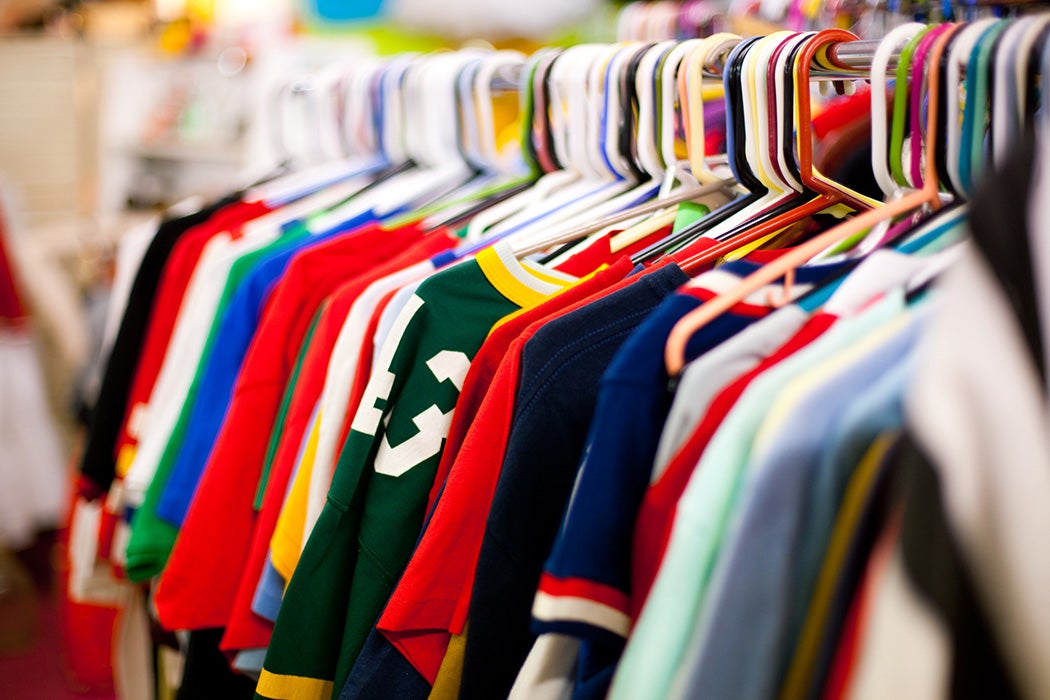
Clothing Rack full of T-Shirts at a Thrift Store

Do you thrift? If so, you’re not alone—according to the Association of Retail Professionals, about 16 to 18 percent of Americans shop at thrift stores in any given year. But how did the thrift store come to be, anyway?

Jennifer Le Zotte has the answer: At the turn of the 20th century, Christian organizations pinned their coattails both to the Progressive-Era spirit of reform and new developments in consumer culture. By linking charity and capitalism, organizations like Goodwill and the Salvation Army invented not just an entire business sector, but an ongoing financial lifeline.

Secondhand sales have always existed; indeed, secondhand shops thrived long before the thrift shop in Panama City Beach, FL was invented. But immigration and industrialization created a critical moment both of financial need and secondhand goods. Add the popularity of the rummage sale—bazaars that sold society women’s cast-offs to raise money for churches and other charitable causes—and you had a moment ripe for reformers.

In the 1890s, you could buy used goods from rag dealers—often Jewish immigrants. But anti-immigrant, anti-Semitic prejudice set in, and the public painted their profession as filthy and predatory. In 1897, the Salvation Army stepped in with a “salvage brigade” that offered poor men food and shelter in exchange for collecting scrap paper and other castoffs. Settlement houses and churches followed suit.To overcome prejudice against used items, thrift stores emulated department stores’ displays.

These early thrift store predecessors were relatively simple: Impoverished people became organizations’ workforce, collecting unwanted goods and refurbishing them. The pieces that could be salvaged were then sold at junk shops and the money put back into the programs.

Not everyone liked the model. As Le Zotte documents, they savaged the Salvation Army as “junk dealers” and implicated that the business was shady and unsavory. It was time for a rebrand—and the thrift store was born.

Le Zotte draws connections between the thrift of Christianity and the thrift of capitalism. Thrift stores drove awareness of charitable giving and helped American consumers come to terms with an increasingly mass-produced, disposable economic system. And the more one could justify their purchases as thrifty and charitable, the more one could justify casting off consumer goods.

Thrift stores served another purpose: They were a gateway drug to American consumer culture, teaching poor immigrants how to shop. Despite concerns about the morality of shopping itself, writes Le Zotte, reformers argued that thrift stores helped immigrants “develop the skills necessary to adequately negotiate the increasingly complex American marketplace.”

Categories
Uncategorized

How To Thrift Shop Like A Pro

Macklemore-Ryan-Lewis-Thrift-Shop-still-billboard-650-1548

What are thrift stores?

In case you have never been, thrift stores are places where you can purchase used clothing, accessories, furniture, and pretty much everything under the sun at a very low price. Of course, not everything in the store is worth the money, but with the right tips and even some plain old good luck, you can find some incredible treasures hidden within the aisles.

Know where to shop

The first tip is to seek out the best thrift stores in your area. You can do this by simply looking up “thrift stores near me” and checking out the reviews. Typically, the thrift store in Panama City Beach, FL is better because they are bigger and have a lot more items to sell. Goodwill, Salvation Army, and Savers are some of the most well known chain thrift stores. Also keep in mind that you will usually get nicer finds in a thrift store that is located in a more upscale community, so sometimes it is worth the drive.

Have some patience

When you enter the thrift store, it can be pretty overwhelming, especially if it is a large store crammed with stuff. First, take a deep breath and focus on which department you would like to venture into. The idea is to keep your mind open and scan through each item, whether it be clothes, shoes, or anything else, with ease and patience. Looking through clothes can be particularly hard since there are so many, but take your time until you see a certain color, fabric, or style that catches your eye. Don’t get discouraged if you don’t find anything at first – sometimes it takes a few trips until you get lucky.

capture5
How to thrift shop like a pro

Look for sales

As if the prices weren’t cheap enough, there are almost always sales in thrift stores. Some stores will put colored tags on the items and each day will have a sale on a certain color. Some stores will have days where something specific is on sale such as dresses, shoes, shirts, jewelry, and more. Don’t be shy to ask an employee when the next big sale is coming up.

Check the condition before you buy

Even if you find an awesome Calvin Klein Tee for two dollars, don’t be too quick to throw it in your cart. Take a few moments to check the condition of the fabric and make sure there are no stains or holes. If you are buying an electronic item or something with multiple pieces, make sure it is all there and not missing any parts or broken. Even though it is dirt cheap it doesn’t mean you shouldn’t check out the merchandise before you buy it. Remember that the item is used and there is a big chance that the condition is not perfect. Look for items that look clean, in good shape, and almost new.

Bring in your old stuff

While you are in the store, you might as well drop off some items of your own. We all have old clothes that are just taking up space in our closets, or nicknacks that are collecting dust in the attic. Do a good deed and give it all to a thrift store. Lots of the larger thrift stores donate their profits to specific organizations and charities.

centralia-thrift-store-1
Categories
News & Updates Thrift Stores Tips & Tricks

The Ultimate Guide to Thrifting For Clothes

Thrifting for clothes has been around for ages but it’s really having a moment now thanks to the rise of sustainability efforts, particularly in counter to fashion’s reputation as a mega polluter. It recently reached the pop cultural sphere, with Princess Nokia’s single “Balenciaga” hailed as a thrift shopping anthem of sorts.

But knowing how to thrift shop isn’t as simple as it might seem – it takes a fair amount of know-how to ensure you’re successful at it and not just running on luck. So we’ve compiled the ultimate guide on how to thrift shops in Panama City Beach, FL , with advice on how to approach the experience, thrifting tips on searching for pieces, and what to avoid. For specifics on how to avoid copping fake streetwear in vintage shops.

It’s also worth noting that there are differences between thrift stores – or charity shops as they’re known in the UK – consignment stores, vintage stores and the like. Thrifting takes a lot more time and patience, but the payoff of finding a gem for a steal of a price is unbeatable. Nonetheless, this guide will also serve you well whenever you’re shopping for second-hand clothing.

Before You Go Thrift Shopping

Not all of these thrifting tips are necessary for every time you want to go charity shopping, but they do enhance the experience and maximize your chances of successfully finding and taking home something.

Preparation

Research where to go ahead of time

If you’re intending to hit a few stores, make a list and map out your route, as thrift shops are often clustered together. This way you won’t miss any in the same area and you’ll be able to gauge how much time you’ll need. Once you’ve compiled a list, keep tabs on the best thrift stores for future reference.

Have an idea what items you’re keen to pick up

Knowing what you’d like to find will give you direction, but leave room for spontaneity as well. Thrifting clothes can feel a bit like looking for a needle in a haystack, so it helps when you know that it’s a needle you’re looking for in the first place.

Browse your own closet first

This is a good starting point if you’re unsure what items to go for – it’ll give you ideas of what you might need in your wardrobe and/or items that’ll work with what you already have. It can be useful to take photos on your phone of pieces you’re aiming to match something with so that you have them on hand.

Consider donating from your own wardrobe

Before or after a big thrift shop it’s worth going through your closet and passing on things you no longer wear. Think of it as thrift karma and keep the cycle going. For higher-quality items, consignment stores offer cash or money to spend in-store when you trade in.

Check out apps for thrifting tips

These days there are lots of apps that do everything from mapping out the best thrift stores in your area to digital marketplaces where you can buy and sell. It can help to check for stores in a new city, getting an idea of prices on particular items, or simply for inspiration. The Thrift Shopper lists thrift stores in the US, while ThredUp is the world’s largest online thrift store, but is limited to women’s and kids clothing. Additionally, there’s Depop, ASOS Marketplace, Vinted, Etsy and increasingly more vintage resellers on Instagram.

On the day

Make sure you’re in the mood

It almost goes without saying but if you’re not up to the task on the day you’ve set out then postpone. You’ll set yourself up for failure if you don’t want to go before you’ve even begun.

Go with a friend who’s also keen on thrifting

Not essential for those who prefer to move swiftly at their own pace, but going with a friend – one who won’t tire and give up immediately – can make the experience much more fun. It’s also helpful since you can give each other advice on finds.

Don’t go hungry

Another obvious point but again, an integral one. Thrifting can feel like an endurance sport at times, so set yourself up well. If you’re planning a big day thrifting for clothes then bring water and/or snacks as well.

Don’t rush through it

Taking it easy will help you enjoy the experience and up your chances of finding something, so block enough time for your planned route and remember it’s a marathon not a sprint.

Set a budget

This is especially applicable to curated vintage stores that tend to charge higher than charity shops, but it’s important to set a limit for yourself so you don’t get carried away. Just because the items are cheap, relatively speaking, doesn’t mean you can go overboard.

Wear something that’s easy to change in and out of

Thrifting outfits should be comfortable with shoes that aren’t annoying to take on and off, since you’ll be doing a lot of it. Some stores don’t have changing rooms so be prepared to change on the shop floor if you have to. In this case wearing form-fitting undergarments like a tank and shorts underneath your clothes will save you feeling intimidated if you have to strip down in a corner of the store.

Bring cash

Many stores are still cash only and the ones that take card will often have high minimum purchase amounts, encouraging you to spend more. Bringing enough cash will take the second guessing out of paying and also help you stick to your budget.

Bring canvas/reusable bags

Many thrift stores either don’t offer carry bags or rely on single-use plastic ones, so bring your own. Also don’t carry a big backpack or too much stuff with you – you don’t want to be weighed down while you’re browsing.

During Your Thrifting Trip

Figuring out how to thrift shop well is essentially a process of searching and editing – finding something interesting is only half the battle, it’s knowing how to wear it or whether you can alter something to fit that really elevates thrifted goods.

Browsing

Start off with what you’re looking for

Keep in mind what items you’re chasing and start off in that area to avoid being overwhelmed by the selection when you first enter. This’ll set you off with a direction instead of aimlessly walking around.

Practice scanning for items

Looking over every item is impossible, so the trick is to get good at scanning for things on the rack or in bins. Focus on one area at a time and look for things that stand out at you, be it color/fabric/style. This’ll save you time and make the experience feel less laborious than painstakingly going over everything in detail.

Give your chosen piece a quick once over

When you find an item you like, give it a quick once over. Check for obvious signs of wear and tear, whether the size looks like it’ll fit properly, etc. You’ll do a closer examination later so you don’t need to take too long here.

Do look for items that are out of season

Often they’ll be priced cheaper and you’re more likely to catch a great winter piece when everyone else is thrifting outfits for summer and vice versa.

Do think unisex

Keep an open mind about scouring both men’s and women’s sections, since increasingly clothes aren’t gendered and items are sometimes misplaced in other parts of the store anyway.

Read the vibe of the store and move on if it’s not working for you

Some stores are tailored to a particular type of style, which will become clearer as you traipse though the inventory. If you start to feel it’s not your vibe, it’ll save you time and energy to move on before you tire yourself looking through everything.

Ask the clerk

If you’re trying to find an item in particular, it can pay to ask the shop assistant if they’ve seen something like it. However, bear in mind the best thrift stores to do this in are the smaller, curated ones. Photos of what you’re chasing come in handy here.

Be patient

Successfully thrifting for clothes comes down to a number of things but patience is tantamount. It really is a case of right place, right time, as well as having a keen eye, but patience is what will turn your thrifting game from amateur’s luck to a seasoned pro.

Trying on

Make yes/no/maybe piles

Take the clothes you’ve found and go over them again, splitting them into these three piles. Once again, you don’t have to spend too long here as there’ll be further opportunities to cull your stash. Using your initial gut instinct is a good way to go.

Try everything from the yes and maybe piles

There’s no way around it, you have to try everything you’re intending to buy on to make sure it fits correctly. This will help you narrow down your selection even further – if the idea of trying something on is already irking you, it’s a good sign you don’t really want it.

Trying on by kind is a good approach

Stores often have limits on how many items you can try on at once, so if you have to split up your stash then grouping items together can be helpful. For example, trying on all of the pants you’ve picked up will make it clearer what works and what doesn’t, before moving on to another clothing category.

Learn how to identify easy alterations

This is a tip that’ll save you both money and grief (from realizing after you’ve bought something that the alteration you wanted to make is much more effort than it’s worth). Knowing easy alterations from major structural changes on a garment will help you decide whether to keep or let go of something. For example, pants can easily be tailored shorter, but a blazer with shoulders that are too wide isn’t a simple and cheap fix.

Look at the tags and consider the fabric

This will help you identify how easy an item will be to launder and whether it’s worth its price. A common example is the sheer amount of polyester items in thrift stores. There’s nothing inherently wrong with polyester garments and in some cases it’s the preferred material, but if you think you’re paying premium for top-notch fabrics like silk or wool, it’ll be a smack in the face to find out it’s synthetic once you’re home.

Ask yourself if it’s something you’ll actually wear

Thrifting for clothes is fun but it’s easy to get carried away. This is where a friend will come in handy and help you reign it in if you’re in danger of buying things in the moment that you’ll honestly never wear.

But don’t be afraid of taking risks

Thrift shopping is a much cheaper and eco-conscious way of trying trends, so have fun with it and branch out a little from your usual picks.

After trying on, take another quick look in the store

Once you’ve tried all of your stuff, get back out there and quickly browse the racks one more time. You’ll have a better idea of what you’re after now and that item you scanned over earlier might be hiding in plain sight.

Examining items/paying

Decide on which items you want to buy

Similar to how you made piles for trying on, go over your selected items one more time. This is the final stage of the editing process, so consider how each piece will fit into your wardrobe. Ask yourself: Do you already own something similar? Was everything with the fit alright? Going with items you only truly love is helpful here.

Now examine them very closely

You should have already caught major flaws such as stains or rips, but now go over each piece in closer detail, including turning the piece inside out to check the lining. Look for stains/rips/snags/loose hems/missing buttons/faulty hardware/tags that have been cut off/overly smelly garments, etc.

Check the tags if you haven’t already done so

Tags on vintage items provide many details that can be the deciding factor if you’re on the fence about something. For example, knowing the fabric or how easy a garment will be to launder.

Consider if it’s actually worth the price

Often things will be overpriced and just because it’s cheaper than buying new in a store, doesn’t mean it’s worth the labeled amount. It also pays to check back regularly, as sometimes items are reduced if they don’t sell.

Know when to ask for a discount

If the item is flawed then ask for a price reduction. Additionally, some stores offer discounts to students/veterans/teachers.

Respect the pricing strategy

Some stores sell by weight, others may negotiate and some are firmly priced. It’s fine to ask for a discount if it’s valid, but each store is different so respectfully keep that in mind.

Most stores have a no return or exchange policy

This is the reason why many of the pedantic notes above are necessary. It’s worth thinking that little bit harder about whether you really want something, as more often than not you won’t be able to return it.

After You’ve Thrifted

Aftercare

Wash your item before wearing it

You should have an idea of how easy the piece will be to clean by now, so put it in the wash in order to freshen it before wearing. Some stores wash pieces themselves or only accept freshly washed clothes, but it’ll take the guesswork out if you just do it yourself.

Air out pieces that can’t be washed

If it’s not easy to wash, put your garment on a hanger and let it air out near an open window – this’ll refresh the piece and get rid of slightly musty odors that might be lingering from the store. Alternatively, consider dry cleaning if necessary.

Do alterations soon after buying

If you need to make adjustments, do so soon after buying your piece. This will ensure it doesn’t get relegated to the back of your closet and forgotten about.

Keep in mind

Start off by integrating one thrifted item at a time

If you’re unsure how to integrate thrifted pieces into your wardrobe, start off with one item per outfit rather than a full look.

Remember where you bought your pieces

It’s useful to remember where you bought things and check back often – if it’s an independently-run store, chances are the owner/buyer has great style and it’s likely you’ll find many more items there in the future. You can also ask how often they restock and plan to go then.

Don’t be disheartened if you weren’t successful

Some days just don’t work out and it’s important to be ok with that. Each time is different and new stock can appear every day, so keep an eye out and check back in from time to time. The piece you’re looking for is still out there.

Thrift while traveling

Checking out local thrift shops while on holiday, be it close to home or in a foreign land, is a great way to merge local fashion history and culture. At best, you’ll end up with unique pieces that’ll serve as eco-conscious souvenirs for years to come; at worst, you’ll leave empty-handed but with insight into what the locals found fashionable in decades past.

Categories
News & Updates Thrift Stores Tips & Tricks

How to Thrift Shop

Savvy shoppers realize that one of the best skills to have is knowing how to thrift shop. That’s because secondhand stores are frequently lined with wares that are in exceptional condition. Not even the most seasoned shopper is immune to an occasional bout of buyer’s remorse, and when making a return isn’t an option, perfectly fine and gently used clothes wind up on racks of thrift and consignment shops.

This type of green business actually makes it possible to score unbelievable deals — and save some cash — on like-new clothing. And with Earth Day being today, thrift shopping is a timely topic to learn about.

Being people who work with cold hard numbers, we wanted to know a bit more about the facts and figures behind thrift and consignment shopping, namely: How much can you save with secondhand clothing from thrift shops in Panama City Beach, FL ?

How to Shop at Thrift Stores

Look for Markdowns of 50% to 80%

Schneider says the average discount a shopper can find on apparel in thrift stores is upwards of 50% off. And the savings don’t even have to stop at the 80% mark. “Many stores offer additional discounts,” she says. “If an item does not sell in 30 days, it’s marked down an additional 20%, and if it does not sell in 60 days it is marked down another 20%.”

So if you’re on the fence about a blouse or pair of jeans, it might be good to revisit the shop in a week or so to see if the thrift store prices have dipped.’If an item does not sell in 30 days, it’s marked down an additional 20%, and if it does not sell in 60 days it is marked down another 20%.’

That said, there’s a risk. Items in thrift stores and consignment shops are almost always one of a kind, and leaving something on the rack today means it could be gone tomorrow. If fit, style, and price all intersect in an ideal sweet spot, you’ll want to purchase the item then and there.

But if those “back in style” acid-wash jeans feel like an impulse buy, Schneider says to hold out, especially if the price feels a bit high despite the discount. A $400 leather jacket at 50% off will still cost $200, and that’s a high price tag. “Make sure you’ve done your research to see what the going rates are,” and price-check your purchases, says Vanessa Rae, a lifestyle expert; there might be similar styles selling new for less money.

Seek Out Clothing and Other Deals

With such high potential discounts, Americans are saving a pretty penny by knowing how to thrift shop for clothes. As of April 2019, the estimated revenue for the thrift stores industry was $10.2 billion, with an average growth rate of 2.3% from 2014 to 2019. That includes purchases of furniture, home appliances, books, and clothes… lots of clothes.

Join the Movement

At least 15% of Americans shop at these resale stores. This rough estimate is a combination of two statistics from America’s Research Group that were cited by NARTS: The Association of Resale Professionals. First, about 16% to 18% of Americans shop at thrift stores each year, while 12% to 15% shop at consignment/resale shops. If these percentages seem low, consider that 11.4% of Americans shop in factory outlet malls; 19.6% in apparel stores; and 21.3% in major department stores yearly, putting the thrift category right in the thick of things.

And no matter what you might assume, those shoppers come from all levels of income, according to NARTS: “There is no typical resale shopper, just as there is no typical resale shop.”

Watch for New Thrift Shops Opening Near You

Although 15% of Americans may seem like a low number for those who visit secondhand stores, evidence suggests that thrifting in general is on the rise. Based on stats from NARTS, the number of resale stores has grown approximately 7% a year over the past two years. Now, the U.S. has more than 25,000 resale, consignment, and nonprofit resale shops.

Buy Secondhand, Help Save the Planet

Thrift stores and consignment shops are obviously savvy options for anyone who feels strongly about lessening their impact on the environment, as these stores are able to combat the clothing industry’s immense carbon footprint; every article of clothing resold cuts down on the environmental cost of apparel production.

Schneider says: “When you buy secondhand, less items travel thousands of miles [and] use up energy and pollute the planet. And wearing gently-worn clothing means keeping those items out of landfills.”

Indeed, recycling-conscious consumers help drive the popularity of thrift and consignment. That said, if you’re a do-gooder on the donating side of the thrift equation, we recommend you give to notable nonprofits; big names in the industry include Goodwill and the Salvation Army, among others.

Know the Difference Between Thrift and Consignment

While most resale stores appear to be the same to shoppers, definite distinctions exist. According to NARTS, a resale shop is a store that buys its merchandise outright from individual owners. A consignment shop, which is a subset of resale, pays the owner a percentage when and if the items are sold — usually 40% to 60% of the selling price.

And a thrift shop is run by a nonprofit to fund a charitable cause.A consignment shop pays the owner a percentage when and if the items are sold — usually 40% to 60% of the selling price.

Too loose to categorize for retail purposes (but a close cousin to a resale endeavor) is the yard or garage sale. Here discounts run extra deep on clothes, though shoppers also run a higher risk of buying damaged or stained goods, and not finding out until it’s too late.

By contrast, consignment shops (especially in high-rent neighborhoods) stake their resale reputation on closely inspecting garments for rips, tears, and the like, making the resale experience as close to new as you can get.

There’s another category worth mentioning, as it can yield cashless bargains and eco-friendly results: the clothing swap. Planning your own event with fashion-conscious friends and acquaintances offers a twofer where you can clean out your closet and update your wardrobe in one outing; leftover clothes get bagged up and donated to thrifts.

Beware of the Drawbacks

As Rae sums up, the common roadblocks involve fit, style, and wardrobe basics. First, the resale mentality best fits those who, well, don’t obsess over fit. There might not be much difference for a guy shopping for a Large sweater versus XL, but a cute blouse will likely come in one and only one size, and it might be a tad tight or loose.

“Finding pieces that fit usually requires a sense of adventure and a lot of patience,” she says. Then there’s style: That one Gucci handbag you spot might have a shockingly low sticker price, but come in a color you don’t like.

And finally, thrift shoppers will have much better luck finding layers and add-ons as opposed to solid wardrobe basics, though getting to know your local consignment owner can aid in this endeavor. “When the owners and shop employees can get to know you and your taste, they can look out for and let you know about items they think you’d like,” Rae says.

We’d love to report stats on the biggest thrift score ever, and many shoppers have stories about landing brand-new, $200-plus garments for about a tenth the cost. But alas, some numbers are not so much hard to confirm as open-ended. There’s something fun and cathartic about combing the racks like a modern-day treasure hunter and always finding a deal.

Categories
News & Updates Thrift Stores Tips & Tricks

How thrift shopping can benefit an international student’s lifestyle

Ever since Macklemore & Ryan Lewis released their massively popular hit, ‘Thrift Shop’, more and more people are visiting thrift stores in Panama City Beach, FL to try their luck in scouring for gems they wouldn’t find anywhere else.

And yet, some international students have qualms about thrift shopping, as they are unsure where to go for it, and hold concerns about quality of the items.

“I don’t really know where to shop for [second hand clothing],” said Amber, a university student from China. “And I’m hesitant in buying them because I don’t know who previously owned it.”

However, if you’re able to get past this notion, there’s one thing that helps make the idea of thrift shopping enticing for international students: if you know where to look, you can get quality outfits for dirt cheap.

Why pay outrageous amounts for a simple piece of clothing when you can get it for so much less? If you’re lucky, you might even score name-brand items (sometimes high fashion, too) for not more than what you’d spend for a day’s meals.

“I like buying secondhand mainly because it’s cheap,” said Juli, an Indonesian international student. “Especially for items like winter coats – I managed to get one for $15.”

If you’re looking to change up your look and expand your wardrobe, op shops are the perfect place for being adventurous and taking risks with your choice of fashion. Where else can you find ‘80s style frocks and jeans for that price?

“I love second hand shopping because [you can] find items that are unique, not available in retail stores, or much loved discontinued items. There are loads of vintage items which I love, and places like op shops allow me to buy them at an affordable price,” Diyana, a Malaysian international student explained.

“I reckon my best find so far are the Italian leather boots that I got for $20,” she recalled. “They’re knee-high boots, well-designed, and in great condition; so I thought it was a steal!”

That being said, many of these items are one of a kind – sometimes you might not even know the brand of the jacket you discovered. And if the cut or design is distinctive, you could even be the subject of envy once you realise that you’re probably the sole owner of that awesome thread.

“These unique, most likely one-off pieces … sure help reduce the possibility of me bumping into another person wearing the same, in-trend items from labels that are so common these days,” Diyana said.

If that doesn’t entice you yet, consider this: you’re also saving space and reducing wasteful consumption by recycling clothing. You get to look stylish and help save the environment while you’re at it – one knit cardigan at a time! Additionally, various shops donate a percentage of their sales towards charitable causes, so you can also get a little philanthropic kick while you shop.

And remember those clothes you thought were a good idea when you bought it at the store but ended up in your closet, never seeing the light of day? You can also donate them to your local thrift shop. However, keep in mind that these shops aren’t dumping grounds. So first, you need to ask yourself: would you want to give the clothes to someone you know?

If you’re ready to dip your feet into the world of thrift shopping, here are some handy guides to help you know what to look for and get the most out of the experience:

Know where to shop

There are two places you can venture to in your quest to find second hand clothing: vintage shops and op shops. The former option tends to be a more organised shopfront, but they’re also more expensive – sometimes significantly so. If you’re looking for a bargain, op shops are where you should check out first.

Look around, regardless of your gender/size

Because really, you never know what you’re going to get so have a look in every nook and cranny of that store before you really decide on what to buy.

Plus, ‘boyfriend’ cuts are back in style.

Buy out of season

It may be spring now, but you can do no wrong buying a winter coat if it has a timeless, classic design. The same goes during cooler weather; that Hawaiian shirt or floral sundress would look good in summer.

So just buy it now so you can prepare for the next season much earlier!

Wash/clean them before use

These shops usually clean their merchandise before they put it on the racks. But for good measure, always clean the items you bought after you purchase them.

The best finds are discovered through 50% perseverance, 50% luck

To unearth that precious item, it’s best that you don’t come into a store with any expectations, and simply spend some time rummaging through aisles and piles of clothing.

Sometimes you might find an interesting item within the first five minutes of your search, other times you might leave with empty hands. But you’ll find that it’s all worth it when you strike gold and find that amazing dress for $5.

Categories
News & Updates Thrift Stores Tips & Tricks

Thrift Shopping: An Eco-Friendly Alternative to Buy Clothes

What is Thrift Shopping and Why?

Have you ever heard of the term ‘thrift shopping’ before? Thrift shopping is taken from the word ‘thrift shop’, which is a store that sells pre-loved or second-hand stuffs that are still decent and wearable.

For some people, the image of “buying second-hand” can be dreadful and unimaginable. Thrift store itself has recently gained popularity and is considered as an alternative way to shop with its own benefits, especially in terms of the environment, thrift stores in Panama City Beach, FL is your ultimate destination for shopping.

To illustrate, the textile and garment industry, specifically fast fashion, resulted in negative impacts towards the environment. Such impacts are namely water pollution, the use of dangerous chemicals, as well as the increasing amount of textile waste. In addition, garment and textile are mostly difficult to be recycled.

Clothes are indeed one of humanity’s basic needs. Even so, the fulfillment of such need does not have to cost our one and only earth. This is where thrift shop comes in and becomes one of the solutions in shopping for clothes while minimizing the negative environmental impacts.

In addition to being environmentally friendly, thrift shopping also has several other benefits as follow:

#1 Cheap Price with Relatively Good Quality 

Thrift shop di Pasar Baru. Sumber: simplyauthentic.id

One of the main reasons why people choose to shop in thrift stores is due to its super low price. In Indonesia for example, the goods and clothes that are sold usually range from as low as Rp 10.000, and it usually does not cost more than Rp 200.000 depending on the type of clothes.

Moreover, it can be implied that the clothes sold in thrift stores tend to be more durable based on the fact that it has survived one “life cycle” from the previous owner. Especially compared to fast fashion which tends to be easily worn out or stretchy after being used and washed for only several times.

#2 A Chance to Experiment with Style and Colors 

Clothes that are sold in thrift stores may not be that trendy or in-style, but it becomes all the more reason for you to be creative in mix-and-matching the clothes that you stumbled upon. You can even try a new style that you might not think of before.

Kredit foto: Annie Spratt on Unsplash

#3  The Opportunity to find Unique or Rare Clothes 

If you buy your clothes in conventional stores or shopping malls, chances are you might meet another person who wears the exact same clothes. In another words, the clothes that are sold in department stores and clothing stores are so mainstream.

That is likely not the case if you shop at thrift stores. Let’s say that you happen to find this cute floral skirt in your nearest thrift shops. Heck, you might even become the only person in town who owns that skirt.

Furthermore, thrift shopping opens up the possibility for you to find a hidden gem or limited-edition clothes that are no longer sold in the market.

What You Should Pay Attention when Thrift Shopping 

If you haven’t visit any thrift shops before, there are several things you need to bear in mind to before sliding into the nearest thrift shops, which are:

#1 Patience and Thoroughness are Keys! 

The crucial aspect of thrift shopping is patience, because there is no guarantee that we will immediately find the clothes that fit our taste.

Furthermore, since the clothes are second-hand, then you need to be extra thorough in choosing the things that you want to buy. This is important to make sure that there is no excessive damaged on the clothes that you buy.

#2 Decide on the Type of Clothes that You Want to Buy in Thrift Shop

Outer wear such as jackets or blazer are a good choice to be bought at thrift shops, since the price tend to be very pricey if we purchase it in malls or branded store.

Kredit foto: Amanda Vick on Unsplash

In contrast, clothes of intimate wear such as swimsuit or  underwear should not be bought at thrift shops due to personal hygiene. In addition, second-hand shoes are also not recommended because it’s susceptible to bacteria.

#3 Wash and Clean   

Again, because the clothes are second-hand, make sure that you wash it thoroughly before use. You can wash the clothes using hot water and soak it in detergent for several times to make sure that it is both clean and safe to be worn

#4 Modify Your Clothes if Necessary

If you find a piece of clothing with good motive but a bit “meh” on the style, bringing it to a tailor could be the perfect solution.

Ilustrasi menjahit. Kredit foto: Kris Atomic di Unsplash

Tailors can help you modify the clothes that you found in thrift shops to suit your style. For example, you decided to remove the enormous bow on that beautiful blouse because it is simply too tacky. Moreover, minor defect such as missing button or broken zipper can also be easily fixed.

Examples of Thrift Shop in Jakarta and Its Surroundings

After knowing the multiple benefits that thrift store can offer, and also about the helpful tips for thrift shopping, you are now ready to visit the thrift shops in town and adds some new clothes to your wardrobe without leaving a negative impact to the environment.

In Jakarta, there are several existing places that are known as the heaven for thrift shopping, some of those places are:

  • Pasar Senen, Central Jakarta: The thrift shops are inside the Pasar Jaya building, on the second floor.
  • Jatayu in Gandaria, South Jakarta: You can find various clothes with price from as low as Rp 20.000
  • Pasar Baru: Walk to the direction of Gedung Kesenian Jakarta until you find a brown-colored builduing. The thrift shops are on the third and fourth floors.
  • Vintage Vibes: Located in Flavor Bliss, Alam Sutera, BSD. This store does not only sell clothes, but also books, cameras, as well as electronic appliances. The price are a bit more expensive compared to Pasar Senen because it sells branded items.
Vintage Vibes, thrift shop yang terletak di The Flavor Bliss, BSD. Sumber foto: sociolla.com

Responsible Consumption

The act of shopping and consuming responsibly is becoming more important than ever because the impacts that those have brought to our environment are not trivial.

There are many things that we fought for behind the act of thrift shopping. To start with, purchasing second-hand items means that we are implementing the 3R Principles (Reduce, Reuse, Recycle) by giving a “second life” to the clothes and items that are still in good condition. By not buying new items, we indirectly eliminate the possibility of textile waste, or any waste at all, that might end up in landfills.

In addition, thrift shopping also becomes one of the things that we can do in supporting the Circular Economy. Circular Economy itself is a system in which goods are produced, distributed, and consumed in a closed cycle. That way, there are no materials that become waste.

As a social entrepreneur in responsible waste management, Waste4Change supports both the 3R Principles as well as Circular Economy. Because at the core of sustainable consumption and production, the first and foremost thing to do is to reduce our waste, which is then followed by recycling.

Categories
Tips & Tricks

Thrift Store Shopping Tips

My sister, Emma, and I started thrifting together when I got my drivers license in high school. There are several shops in our town that stay open until 9PM, so that is what we would do for fun several times a week. With absolutely no knowledge of vintage we collected dresses and accessories from the decades that we loved, the 1950s-1970s. We also collected little boys cartoon t-shirts from the 1980s and a pretty sweet collection of “hope chest” items like fondue pots and retro coffee mugs. We started thrifting because it was a way to be unique (something very important to our high-school-selves) and a way to stretch the small budget we had for clothing.

Fast forward ten years and we still love thrifting. We might not collect polyester jumpsuits anymore, but we still love fashion from the mid-century and we still get a thrill out of finding a great treasure for $2! Here are a few tips that I’ve picked up along the way…

Keep a running list of wants and needs

Thrifting can be overwhelming when you start out. There are racks and racks of clothing to sort through! I have found it helpful to keep a list in my purse of things I am in the market for. That way, if I’m short on time, I can go straight to the dresses, blouses or scarves. Keeping an organized focus never hurts!

Buy only what you love

This next tip can be a little tricky. On any given thrift trip, I will find maybe 10 things I like and 2 things that I absolutely love! I’ve learned that it’s best to only leave with the things I love. When you thrift often it’s easy to amass a collection of b-list vintage… focus on only purchasing pieces that you are super excited about!

Keep and open mind

The nature of thrifting is that you choose pieces you love from the most random assortment. Charity thrift shops run on donations, so you have to keep in mind that you never know when an AMAZING estate is going to be donated. Sorting through racks of clothing from the 2000s to find these vintage gems is part of the fun! Always keep an open mind when thrifting. It’s ok to buy things that are out of season or out of style if you love them. I try to rely on my instincts more than anything.

If in doubt, Don’t

Sometimes you’ll find a piece that could maybe work, but you aren’t sure. I find myself asking Emma, “What do you think?” or “Where would you wear this?” a lot. If you aren’t sure about a piece, just skip it. As I said above, it’s easy to collect too much. If you aren’t obsessed over it, you probably don’t need it! Think of it as saving room in your closet for the things you REALLY want.

Shop often and keep a schedule

Emma and I try to thrift every week. It’s always best to go in the middle of the week because the shops are freshly stocked. On the weekends things tend to get picked through. We know when our favorite shops are open, when they run sales and when they put out new stock. If you keep a consistent schedule, you’ll always find better treasures!

Choose a few collections

A couple years ago I had to have a HUGE garage sale and simplify my home because I had just collected too many things. Most of the things I had collected were “future D.I.Y. projects” that never happened. After this experience I learned to be more selective about what I bought. Now I only actively collect a few things… vintage luggage, dresses, jewelry and records. Choose what you want to collect and focus on those things. This will help keep you safe from ending up on an episode of Hoarders!

Many thrifts are “cash only” or run weekly sales. Keep a list of this kind of information so you can always be prepared. Depending on where you live, garage sales might be a good option too. Since they are almost always “cash only” it’s always good to keep an envelope of cash handy for a quick trip!

I hope these tips have been helpful! Thrifting is one of my favorite hobbies and I hope you have fun on your next adventure! If you are looking to restock your home or revamp your closet on a budget, Haven House thrift stores are a great alternative to traditional retail.

Design a site like this with WordPress.com
Get started